Services
 Case studies
 Contact us
 Brochure
Published on April 6, 2026
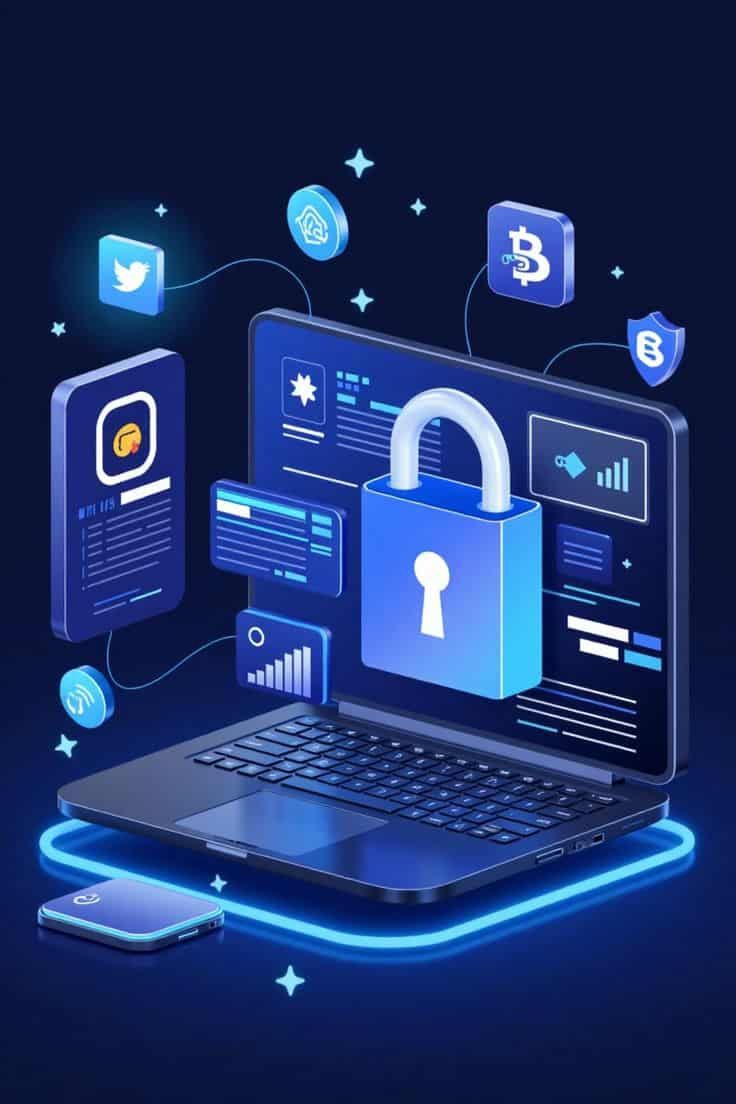
A few years ago, the concept of software security was quite simple. Install a virus scanner, install a firewall, and the job was done. Today, things have to change. As businesses go more and more digital and interconnected, the risks also go up. Today, businesses are operating in a world where the cloud, remote work, and other technologies have created a new environment where information flows constantly. This has also made security a big part of the business process.
One of the biggest changes in the field of IT software security has been the move away from reactive and towards more proactive measures. For instance, in the past, a business would react to a threat after the fact. Today, the aim is to stop those threats before they even happen. This change in the field of IT software security has been necessary because today’s cyber attacks have become much more sophisticated. These attacks are not just against large businesses but also against small and medium-sized businesses.
The emergence of cloud technology and remote work has also been a big change in the field of IT software security. For instance, in the past, the main concern was to secure the office network. Today, the office network and the concept of a network have become irrelevant because people work remotely. Today, the concept of security has to be more about the user and the access to the information. Security has to be a mobile and a distributed concept.
At the same time, cyber attacks are becoming smarter. Hackers are employing smarter methods, such as automation, to identify vulnerabilities faster than ever before. Phishing attacks, ransomware attacks, and poor integrations are some of the most common risks faced by businesses in today’s world. To deal with these risks and challenges, businesses are required to employ smarter and more adaptable security solutions that can keep pace with these evolving risks.
Another significant change is in the way security is integrated into the software development lifecycle. Earlier, security used to be integrated into software development as a secondary feature. However, now security is integrated into every phase of software development. This ensures that applications are developed to be secure right from the beginning. This approach can also help organisations save time, cost, and effort required in dealing with risks and vulnerabilities. Qcentro, security is not just seen as an add-on but as a core element integrated into all our solutions. We follow robust security development practices and keep our systems updated to protect our customers from new vulnerabilities. This includes robust control mechanisms, data protection measures, and security audits. Most importantly, we know that security is a continuous process, and hence we are committed to continuous improvement in our security approaches to keep pace with evolving risks. IT software security is no longer a one-time activity but a continuous process that requires constant improvement and attention. With smarter security approaches and partners, businesses can build trust and confidence to move forward.